
Budgeting, debt payoff, building wealth, and navigating a tricky economy — in plain English, with numbers that actually make sense.
What’s Inside This Guide
1.Where Americans Stand Financially Right Now
2. Budgeting That Actually Works in 2026
3. Building an Emergency Fund Step by Step
4. Killing Your Debt – Credit Cards, Student Loans & More
5. Where to Park Your Cash Today
6. Investing for Beginners and Beyond
7. Retirement Planning: What’s Changed and What You Should Do
8. New 2026 Tax Rules That Put Money Back in Your Pocket
9. Side Hustles and Multiple Income Streams
10. The Money Mindset That Separates Those Who Build Wealth
Let’s skip the inspirational poster stuff and get real for a second.
As of April 2026, Ramsey Solutions’ State of Personal Finance report put the share of U.S. adults living paycheck to paycheck at about 51%. Money stress is common, and it is not a personal failing.
If any of that sounds familiar, this article is for you. Not because I’m going to tell you to cut your lattes or do some 30-day no-spend challenge. I’m going to talk about money the way a financially savvy older sibling would — honestly, practically, and without making you feel dumb for where you are right now.
This is a complete guide to personal finance in 2026. We’ll go from basic budgeting to building long-term wealth. Whether you’ve got $200 in savings or $20,000, there’s something useful here for you. Let’s dig in.
1. Where Americans Stand Financially Right Now
Before we talk about what to do, it helps to understand the landscape. Because honestly? The economic backdrop of 2026 is… complicated.
Inflation has cooled from the brutal 9.1% peak we hit back in June 2022, but prices haven’t come down — they’ve just stopped rising as fast. The Congressional Budget Office forecasts inflation will sit around 2.4% for 2026, which sounds manageable until you realize that grocery prices, rent, and insurance costs are still dramatically higher than they were four years ago. Cumulative price increases since 2020 are hovering near 25%. Your paycheck probably didn’t go up 25%.
By the Numbers
51%
of U.S. adults are living paycheck to paycheck as of early 2026, according to Ramsey Solutions’ State of Personal Finance report.
Interest rates are another big story. After the Fed cut rates three times in late 2025, it reversed course on September 16, 2026, raising the federal funds target range to 3.75%–4% (per Federal Reserve, Source). That means relief on borrowing costs is not guaranteed. Your credit card APR isn’t going to drop from 20% to something reasonable overnight. And mortgage rates are still around 6%–7%, keeping millions of would-be homebuyers on the sidelines.
The job market is holding up, but it’s losing momentum. Wage growth has slowed, and many workers feel the gap between what they earn and what everything costs is widening. That’s a real squeeze — and it’s why financial planning matters more right now than it has in a very long time.
Here’s the silver lining: many Americans remain optimistic about their financial future. People aren’t giving up. They’re saving more, paying down debt, and — slowly — changing their relationship with money. That optimism, paired with the right strategy, is actually powerful. Let’s channel it.
2. Budgeting That Actually Works in 2026
The word “budget” often makes people’s eyes glaze over. It sounds like restriction, like you’re putting yourself in financial jail. But a real budget isn’t a punishment — it’s a plan. It’s just answering the question: where do I want my money to go, instead of wondering where it went?
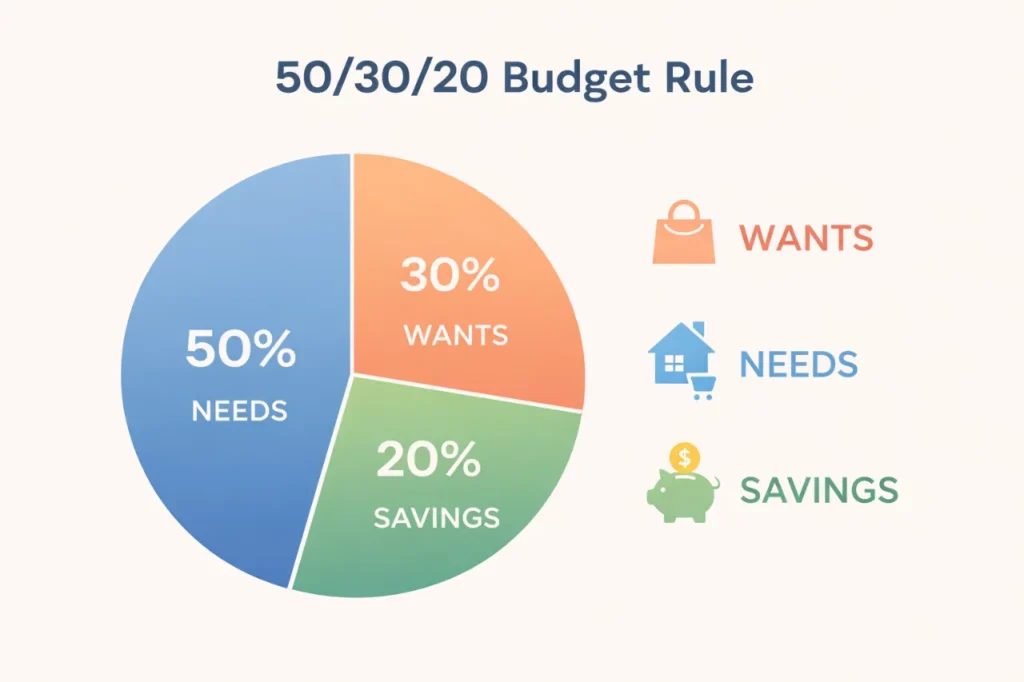
The Budget Framework That Clicks for Most People: 50/30/20
If you’ve never budgeted before, start with the 50/30/20 rule (try our budget calculator to split your own take-home pay). The idea is simple:
- 50% of your take-home pay goes to needs— rent/mortgage, utilities, groceries, insurance, minimum debt payments, transportation.
- 30% goes to wants— dining out, subscriptions, entertainment, shopping, vacations.
- 20% goes to savings and debt payoff— emergency fund, retirement contributions, extra debt payments.
Hypothetical Example
Say you take home $4,500/month after taxes. That means:
$2,250 for needs · $1,350 for wants · $900 for savings/debt
Does your rent alone eat up $1,800? Then you’re already over on needs, and you’ll need to either earn more or reduce somewhere else. This is the reality check that makes budgeting useful — it forces you to see the math clearly.
A lot of people try the 50/30/20 rule and quickly realize their “needs” are eating 65% or more of their income. That’s especially true if you live in a high-cost-of-living city like New York, San Francisco, or Seattle, or if you’re carrying significant debt. If that’s you, don’t panic — adjust the percentages to fit your reality and build from there.
“Loud Budgeting” — The 2026 Trend Changing How We Talk About Money
One thing that’s genuinely different about 2026 is the cultural shift in how we talk about money. There’s a trend called loud budgeting — and unlike most financial trends that pop up on social media, this one is actually useful.
Loud budgeting means being open about your financial choices. Instead of making excuses when you skip a $60 dinner out (“I’m not feeling well”), you say, “I’m prioritizing my savings right now.” Instead of silently feeling awkward about not being able to afford a vacation with friends, you say upfront, “That’s outside my budget this month — want to do something lower-key?”
It sounds simple, maybe even uncomfortable at first. But here’s what happens when people start being honest about money: they stop making impulse decisions to keep up appearances, they find out their friends are in the same boat more often than not, and they actually stick to their financial goals longer.
The Budget Tools Worth Using Right Now
You don’t need a spreadsheet if you hate spreadsheets. Here’s what’s working for people in 2026:
| Tool / Approach | Best For | Cost |
| YNAB (You Need a Budget) | People serious about zero-based budgeting | ~$109/year |
| Copilot Money | Apple ecosystem users who want automation | ~$95/year |
| Monarch Money | Couples managing finances together | ~$100/year |
| Spreadsheet (Google Sheets) | DIYers who want total control | Free |
| Your bank’s built-in app | Beginners, no-commitment option | Free |
AI-powered budgeting is getting genuinely good in 2026. Many apps now predict your upcoming spending, flag subscriptions you forgot about, and even alert you when you’re about to overdraft. That kind of proactive nudge is worth paying for if it helps you stay on track.
Pro Tip
Run a “subscription audit” right now. Open your credit card and bank statements from the past 60 days and highlight every recurring charge. Most people find 2–4 subscriptions they forgot they had. That $15.99 here and $12.99 there add up to hundreds of dollars a year going nowhere.
3. Building an Emergency Fund Step by Step
If you don’t have an emergency fund, everything else in personal finance is harder. Seriously. Without a cash cushion, one flat tire, one unexpected medical bill, one layoff — and you’re reaching for a credit card, which puts you deeper in debt, which makes everything else harder. The emergency fund is the foundation.
The classic advice is to have 3–6 months of living expenses saved in an easily accessible account. That’s still the right goal, but getting there feels overwhelming to a lot of people — especially when you’re just starting out and trying to pay bills at the same time.
So here’s the approach that actually works: start small and make it automatic.
The $1,000 First Milestone
Before you aim for three months of expenses, aim for $1,000. That one number handles the most common financial emergencies — a car repair, an ER copay, a broken appliance. Having $1,000 in a separate savings account means the next time something unexpected happens, you don’t have to swipe a credit card. That’s a huge psychological win, and it builds momentum.
Hypothetical Example
Jessica, 28, works as a dental hygienist in Columbus, Ohio, making $52,000/year. After rent, car payment, and student loans, she had about $180 left over at the end of each month. She automated a $150 transfer to a high-yield savings account every payday. In under 4 months, she had $1,200 saved — her first real financial safety net.
Where to Keep Your Emergency Fund
Here’s a mistake people make: keeping their emergency fund in the same checking account as their everyday spending. That money disappears. You need friction between yourself and that cash — enough that you don’t accidentally spend it, but not so much that you can’t access it in a real emergency.
The answer is a high-yield savings account (HYSA). Competitive HYSAs typically pay far more than the near-zero rates many big-bank accounts pay; APYs change often, so compare current rates before opening one. Some solid options: Marcus by Goldman Sachs, Ally Bank, SoFi Savings, and Discover Online Savings. All are FDIC-insured, easy to set up online, and pay meaningfully better than traditional banks.
Heads Up
Savings rates move with Federal Reserve policy, so compare current rates before you open an account. Even if rates fall, a HYSA will still beat a traditional savings account by a wide margin.
4. Killing Your Debt — Credit Cards, Student Loans & More
Debt is the biggest obstacle between where most Americans are now and where they want to be financially. And in 2026, the debt picture is… not great. Credit card APRs are still hovering around 20% on average. Many credit card holders carry a balance month to month. That means they’re paying 20% interest on money they already spent.
Let’s talk about how to get out.
Debt Avalanche vs. Debt Snowball — Which One Is Right for You?
These are the two main debt payoff strategies, and they both work — the best one is whichever one you’ll actually stick with.
Debt Avalanche: You pay minimums on all your debts, then throw every extra dollar at the debt with the highest interest rate first. Mathematically, this is optimal. You pay less interest over time.
Debt Snowball: You pay minimums on everything, then throw all extra money at the smallest balance first — regardless of interest rate. Once that’s paid off, you roll that payment into the next smallest. You get “wins” faster, which keeps motivation high.
Hypothetical Example: Marcus’s Debt Situation
Debt 1: Capital One Visa – $4,200 balance at 22.99% APR
Debt 2: Medical Bill – $1,100 at 0% (payment plan)
Debt 3: Personal Loan – $6,800 at 14% APR
With the avalanche method, Marcus attacks the Capital One card first (the one with the highest rate). With snowball, he’d kill the $1,100 medical bill first for a quick win. Either way, he needs to find $300/month beyond minimums to make real progress. He picked up a few extra weekend shifts, cut down on streaming services to one, and switched to eating out only for lunch. He paid off the medical bill in 4 months — and that momentum pushed him forward.
Student Loans in 2026: What You Need to Know Right Now
Student loans are back in a big way. After the COVID-era pause ended, the Department of Education moved toward restarting collections on defaulted loans, but as of January 16, 2026 it announced a temporary delay of involuntary collections, such as wage garnishment and Treasury offset (per ED, Source). If you have federal student loans and you’re not making payments, default can still damage your credit, and those collection tools can come back once the delay ends.
There’s also a new Repayment Assistance Plan (RAP) under the One Big Beautiful Bill Act, which launched July 1, 2026 and is replacing some older income-driven repayment options (per ED, Source). See our guide to the new student loan repayment plans. Borrowers should visit StudentAid.gov and make sure their contact information and income documentation are up to date.
Key moves to make right now if you have student loans:
- Log in to your loan servicer account and confirm your current repayment plan.
- If you’re struggling to pay, apply for income-driven repayment before defaulting.
- Check your Public Service Loan Forgiveness (PSLF) eligibility if you work in government, education, or nonprofits.
- Know your interest rate — if it’s high and you have federal loans, refinancing to private may cost you forgiveness options. Be careful.
Credit Cards: The Nuclear Option and Smarter Alternatives
If you’re drowning in credit card debt, you have more options than you might think. A balance transfer card with a 0% intro APR (usually 15–21 months) can let you pay down your balance without racking up interest. This is one of the best tools out there — but only if you actually pay it down during the promo period and don’t just run up new balances.
A personal loan to consolidate high-interest credit card debt is another option (see our guide to debt consolidation loans). If you can get a personal loan at 10–12% APR versus your credit card’s 22%, you just cut your interest cost nearly in half.
“Every dollar you put toward high-interest debt gives you a guaranteed 20% return. No investment on Earth reliably beats that.”
5. Where to Park Your Cash Today
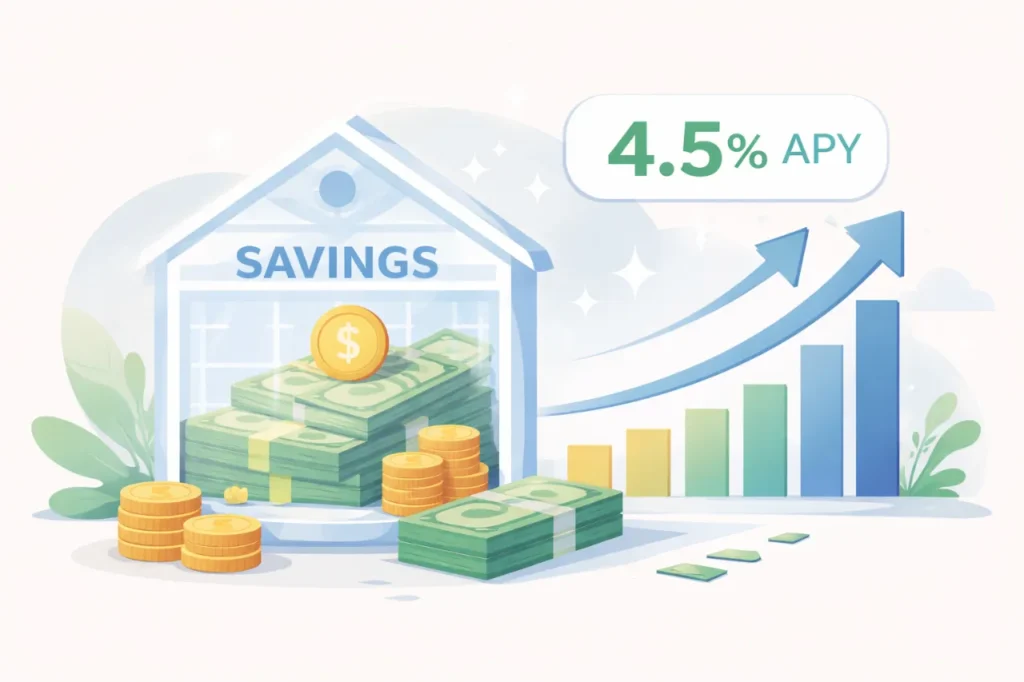
Once you’ve funded your emergency fund and you’re making progress on your debt, the next question is: where should your savings actually live?
In 2026, you have some genuinely good options — options that didn’t really exist the same way five years ago when everything was paying 0.01%.
High-Yield Savings Accounts (HYSAs)
Already covered above, but worth reiterating: if your emergency fund is sitting in a big-bank savings account earning nothing, you’re leaving real money on the table. At a hypothetical 4% APY on $10,000, you’d earn about $400/year for doing absolutely nothing differently. Move the money.
I Bonds and Treasury Bills
Series I Bonds from TreasuryDirect.gov are government-backed savings bonds that adjust for inflation. The rate changes every six months based on CPI. As inflation has cooled, current rates aren’t as exciting as the 9.62% composite rate of 2022 — but they’re still worth considering for money you want completely safe from inflation over 1–5 years.
Treasury Bills (T-Bills) are another strong option. T-Bill yields change with Fed policy, so check current rates at TreasuryDirect.gov. They come with no state income tax on the interest (though federal tax still applies). You can buy them directly from TreasuryDirect.gov with no fees.
Certificates of Deposit (CDs)
If you’ve got money you won’t need for 12–24 months, CDs lock in a rate right now — which matters if you’re worried about rates falling. A 1-year CD gives you a fixed rate for the term; a HYSA might drift lower.
| Savings Vehicle | Typical Rate | Best For | Liquidity |
|---|---|---|---|
| Traditional savings (big bank) | Often near zero | Nothing — move your money | Instant |
| High-Yield Savings Account | Variable; check current APYs | Emergency fund, short-term savings | 2–3 business days |
| 3-month T-Bill | Set at auction; check TreasuryDirect.gov | Cash you don’t need for 3 months | At maturity |
| 12-month CD | Fixed for the term; varies by bank | Money you won’t touch for a year | At maturity (penalty to exit early) |
| I Bonds | Inflation-linked; resets every six months | Long-term inflation protection | 1-year minimum hold |
6. Investing for Beginners and Beyond
Here’s the thing about investing that nobody says enough: you don’t have to understand every stock, ETF, or bond to build real wealth. Most regular people who build serious wealth over time do something boringly simple — they invest consistently in low-cost index funds, don’t panic when the market drops, and let time do the work.
That’s it. Really.
Start With Your Workplace 401(k) — Especially the Match
If your employer offers a 401(k) with a matching contribution and you’re not contributing enough to get the full match, stop reading and go fix that first. Employer matching is free money. A 3% match on your $60,000 salary is $1,800 a year that you leave on the table if you don’t participate.
The contribution limit for 401(k)s in 2026 is $24,500 (up from $23,500 in 2025). If you’re 50 or older, you can add an extra $8,000 catch-up contribution (per IRS, Source).
Index Funds: The Unsexy Strategy That Beats Most Pros
Studies repeatedly show that over 10–20 year periods, the vast majority of actively managed mutual funds underperform a simple S&P 500 index fund. Why? Fees and turnover. An S&P 500 index fund like Vanguard (VOO), or total-market index funds like Fidelity (FZROX) or Schwab (SCHB), charges as little as 0% to 0.03% in fees annually. An actively managed fund might charge 1–1.5%, which sounds small but absolutely decimates returns over decades.
The Compound Math That Should Make You Start Today
If you invest $300/month starting at age 25, and earn a hypothetical 7% annual return (an assumption chosen for illustration; actual market returns vary and can be negative in any given year), by age 65 you’d have approximately $787,000 (assuming 7% compounded monthly with deposits at the end of each month; an illustration, not a prediction). You can test your own numbers with our compound growth calculator. Start at 35 instead? You’d have about $366,000. In this illustration, waiting 10 years costs you more than half of the result. The best time to start was yesterday. The second-best time is today.
The Roth IRA — Possibly the Most Powerful Account You’re Not Using
A Roth IRA lets you invest after-tax dollars and have all growth come out tax-free in retirement. Tax-FREE. You pay nothing on the gains when you withdraw. For anyone who expects to be in a higher tax bracket in the future — which is most working Americans — the Roth IRA is arguably the best retirement vehicle available.
The 2026 contribution limit is $7,500/year ($8,600 if you’re 50+), per IRS (Source). You can open one at Fidelity, Schwab, or Vanguard in about 15 minutes online. For 2026, eligibility to contribute phases out between $153,000 and $168,000 of modified AGI for single filers and heads of household, and between $242,000 and $252,000 for married couples filing jointly (per IRS, Source).
What About Crypto?
Cryptocurrency is still very much in the conversation in 2026 — Bitcoin has matured significantly as an asset class, and institutional adoption is real. That said, crypto remains volatile and speculative compared to index funds. If you want exposure, financial planners generally suggest keeping it to no more than 5–10% of your portfolio — and only after you’ve funded your emergency fund, maxed your 401(k) match, and put money into your Roth IRA.
7. Retirement Planning: What’s Changed and What You Should Do
Retirement planning got a pretty significant upgrade with the SECURE 2.0 Act, which has been rolling out its provisions over the past few years. Here’s what matters for you right now in 2026:
Auto-Enrollment Is Now the Default for New Employers
New 401(k) and 403(b) plans established after 2022 are now required to automatically enroll employees. If you started a new job recently, check whether you’ve been auto-enrolled — and if so, at what percentage. Many auto-enrollments start at just 3%, which isn’t nearly enough for most people’s retirement goals. Most financial advisors recommend saving at least 15% of your income for retirement (including any employer match).
Catch-Up Contributions Just Got Better
If you’re between ages 60–63, the SECURE 2.0 Act created a “super catch-up” provision: the 2026 catch-up limit is $11,250 in place of the usual $8,000 age-50 catch-up (per the IRS, checked Oct. 24, 2026). This is huge for people who started saving late and want to accelerate in the final stretch before retirement.
The Rule of 25 for Retirement Readiness
Here’s a simple benchmark: to retire comfortably, you generally want to have saved 25 times your annual expenses. If you spend $60,000/year, you need roughly $1.5 million saved. This is based on the “4% rule” — the idea that you can safely withdraw 4% of your portfolio per year without running out of money over a 30-year retirement.
Does $1.5 million sound impossible? Break it down. At 35, with $150,000 already saved and investing $1,000/month at 7% average returns, you’d reach roughly $1.9 million by age 62 (assuming 7% average annual return, illustrative only). Possible? Absolutely.
Retirement Pro Tip
If your employer offers a Roth 401(k) option — seriously consider it. Unlike a traditional 401(k), where you pay taxes on withdrawals in retirement, a Roth 401(k) grows tax-free. For younger workers, especially, this can save an enormous amount in taxes over the course of decades. And unlike a Roth IRA, there are no income limits to contribute to a Roth 401(k).
8. New 2026 Tax Rules That Put Money Back in Your Pocket
Tax planning isn’t just for rich people with accountants. The 2025 One Big Beautiful Bill Act made a bunch of changes that directly affect middle-class Americans — and knowing about them could save you real money.
Higher Standard Deductions
The standard deduction jumped again for 2026:
- Single or Married Filing Separately:$16,100
- Head of Household:$24,150
- Married Filing Jointly:$32,200
Most Americans (roughly 90%) take the standard deduction rather than itemizing. Our guide to the 2026 tax brackets and standard deduction shows the official amounts. These higher numbers mean more of your income is sheltered from taxes without you having to do anything special.
The Senior Standard Deduction Bonus
For tax years 2025 through 2028, the IRS describes an additional $6,000 deduction for each eligible person age 65 or older. It begins to phase out above modified adjusted gross income of $75,000 for single filers and $150,000 for joint filers (per the IRS, checked Oct. 24, 2026). Check the IRS rules for how the phase-out applies to you.
SALT Cap Relief for Homeowners in High-Tax States
The cap on the State and Local Tax (SALT) deduction jumped dramatically — from $10,000 to $40,400 for 2026, with the limit reduced for modified AGI above $505,000 (per IRS, Source). If you’re a homeowner in California, New York, New Jersey, or Illinois and you itemize, this is a potentially large deduction you haven’t been able to use for years. Run the numbers with a tax professional — it may now make sense to itemize.
New Car Loan Interest Deduction
This one is new and underappreciated. If you financed a new, U.S.-assembled vehicle purchased after 2024, you may be able to deduct up to $10,000 per year in car loan interest. Given that auto loan rates have been running 6–9%, this deduction can be meaningful for people who recently bought a car. Check eligibility — there are income limits, and it applies only to qualifying vehicles.
Child Tax Credit Increase
The maximum child tax credit increased to $2,200 per child in 2025 and is now indexed for inflation. For families with multiple kids, this can add up quickly at tax time.
Tax Planning Tip
Contribute to a Health Savings Account (HSA) if you’re on a high-deductible health plan. HSAs are the only triple-tax-advantaged accounts: contributions are pre-tax, growth is tax-free, and withdrawals for qualifying medical expenses are tax-free. In 2026, the contribution limit is $4,400 for self-only coverage and $8,750 for family coverage (per IRS Rev. Proc. 2025-19, Source). It’s also completely fine to invest the money inside an HSA rather than spending it — many people use it as a stealth retirement account.
9. Side Hustles and Multiple Income Streams
For many Americans, getting a higher-paying job or an additional source of income is a top financial goal for 2026. And it makes sense — when the path to financial stability feels blocked by inflation and stagnant wages, earning more is often the fastest lever you can pull.
The good news: there have never been more legitimate ways to earn extra income outside of your 9-to-5.
Freelancing and Gig Work That Actually Pays
The platforms have matured, pay has improved in competitive niches, and AI has increased demand for skilled human work in certain areas (because companies need people who can verify, supervise, and build on top of AI outputs). High-demand freelance skills in 2026 include:
- AI prompt engineering and workflow automation
- Video editing and content creation (YouTube, TikTok brand deals)
- UX/UI design and web development
- Bookkeeping and tax prep (especially for small businesses)
- Copywriting and content strategy
- Tutoring (online platforms like Wyzant, Varsity Tutors pay $40–80/hr)
Hypothetical Example
David, 34, works full-time as a marketing manager in Atlanta. He started doing freelance copywriting on Upwork in the evenings and on weekends in January 2025. By mid-2025, he was earning an extra $1,500–$ 2,000 per month. He used every dollar to pay off his car loan 14 months early — saving over $1,100 in interest — then redirected that payment into his Roth IRA. The side hustle didn’t just earn him extra money; it also gave him a sense of purpose. It restructured his entire financial trajectory.
Passive Income (Realistically)
“Passive income” gets thrown around a lot, but true passive income requires upfront work. Some legitimate options that work in 2026:
Dividend investing: Once you’ve built a portfolio, dividend stocks or ETFs (like VYM, SCHD) pay regular cash. This is real passive income — but requires capital to build first.
Renting a room or property on Airbnb: If you own property, short-term rental income is still one of the best returns on real estate assets — though local regulations vary. Even renting out a spare room for $600–1,200/month can dramatically change your financial picture.
Digital products: Courses, templates, ebooks, or Notion dashboards. These take real time to create but can generate income while you sleep once they’re live on platforms like Gumroad, Etsy (for digital downloads), or Teachable.
Be Careful: The Side Hustle Tax Trap
If you earn more than $400/year from freelance or gig work, the IRS considers you self-employed, and you owe self-employment tax (about 15.3%) on top of regular income tax. Set aside 25–30% of every self-employed payment you receive for taxes. Open a separate savings account and put that money there immediately. Nobody wants a surprise $4,000 tax bill in April.
10. The Money Mindset That Separates Those Who Build Wealth
We’ve covered a lot of tactics. But tactics alone don’t build wealth. Plenty of people know what they’re supposed to do with money and still don’t do it. The real difference — the thing that actually separates people who build financial security from those who stay stuck — is mindset.
This isn’t fluffy self-help talk. It’s behavioral finance, and it’s backed by real research.
Stop Optimizing for Today’s Comfort at Tomorrow’s Expense
Humans are wired for immediate gratification. The psychological term is hyperbolic discounting — we overvalue things in the present and undervalue things in the future. That’s why we charge a vacation to a credit card at 22% interest. That’s why we skip the 401(k) contribution when we get a raise, rather than increasing it automatically.
The antidote is automation. When your good financial behavior is automatic — when $400 goes to your Roth IRA, and $300 goes to savings the morning after every paycheck — you’ve removed the daily willpower battle. You don’t have to be disciplined. The system is designed for you.
Your Net Worth Is a Scoreboard, Not a Report Card
A lot of people avoid looking at their finances because they feel guilty about where they are. Is Net worth negative? Is debt high? That’s painful to see. But financial avoidance is one of the most expensive habits a person can have. If you don’t look at the problem, you can’t fix it.
Start tracking your net worth every month — even if it’s negative. Use a simple spreadsheet: add up everything you own (accounts, home equity, car value, investments), subtract everything you owe (mortgage, car loan, student loans, credit cards). That number is your net worth. Watch it change. When it ticks up by even $500, that’s real progress. Making the invisible visible is the first step to making it better.
The “Pay Yourself First” Principle That Changes Everything
Most people approach money this way: income comes in → pay bills → spend on life → save whatever’s left. The problem? There’s rarely anything left.
Flip it: income comes in → automatically transfer savings/investment amount → pay bills → spend the rest guilt-free. This is “pay yourself first,” and it’s the single most reliable habit of people who consistently build wealth. It’s not about earning more. It’s about treating your future self as a bill you pay before anything else.
Comparison Is Quietly Bankrupting You
One uncomfortable truth: a significant portion of American consumer debt stems from people spending money they don’t have to look like they have more than they do. New car to keep up with the neighbors. A designer bag that went on a credit card. A vacation posted on Instagram that took 18 months to pay off.
The research on this is detailed: the people who actually have significant wealth rarely display it the way we assume. The millionaire next door — a concept as true in 2026 as when Thomas Stanley wrote about it — is often the quiet 52-year-old driving a used Honda who’s been maxing their 401(k) for 25 years.
Small Wins Compound Into Big Ones
You don’t have to overhaul your entire financial life this weekend. Pick one thing from this article. Just one. Maybe it’s opening a high-yield savings account and moving your emergency fund there. Our guide to high-yield savings vs CDs after the Fed rate hike explains how to choose between them. Maybe it’s logging into your 401(k) and bumping your contribution by 1%. Maybe it’s canceling two subscriptions you don’t use.
One thing done today is worth more than a perfect plan that never gets started. Progress is the point. The math of compound interest doesn’t care whether you started perfectly — it rewards you for starting and staying consistent.
Final Thought
Personal finance isn’t about being perfect. It’s about making slightly better decisions with money, consistently, over a long period of time. The person who saves $200/month for 30 years beats the person who saves $2,000/month for 3 years and then quits. Boring, consistent, automated progress wins every time. You’ve got this.
Your 2026 Personal Finance Quick-Start Checklist
If you want to take action today, here’s a prioritized list of moves, roughly in order of impact:
- Run a subscription audit — cancel anything you haven’t used in 60 days.
- Open a high-yield savings account if you don’t have one (Ally, Marcus, SoFi).
- Set up an automatic transfer to savings on payday — even $100/month to start.
- Make sure you’re contributing enough to your 401(k) to get the full employer match.
- Open a Roth IRA if you’re eligible and start contributing monthly.
- List all your debts with balances and interest rates — pick a payoff strategy (avalanche or snowball) and execute.
- Log in to StudentAid.gov and confirm your repayment plan if you have federal loans.
- Check the new 2026 tax changes — especially the SALT cap and car loan interest deduction if they apply to you.
- Calculate your net worth — even just once — so you have a starting point to improve from.
- If you’re not earning enough, make a concrete plan to change that in the next 90 days.
“If you want a simple budgeting method, check this detailed guide on the 50/30/20 rule”

FinovativeHub Editorial Team publishes personal finance guides for American readers, covering budgeting, credit cards, loans, and retirement accounts. We aim to explain how things work in plain English and to cite official sources, such as the IRS, where they apply. Rates, fees, and limits change, so confirm current terms with the provider or agency before you act.
Pingback: High-Yield Savings vs CD After the Fed Rate Hike: Where to Keep Cash in October 2026 — FinovativeHub
Pingback: 2026 401(k) Contribution Limits: Complete Year-End Guide
Pingback: FSA Deadline 2026: Use-It-or-Lose-It Rules & Carryover
Pingback: Medicare Part D 2027: $2,400 Cap, $700 Deductible, Plan Tips
Pingback: RMD Deadline 2026: How to Calculate Your RMD by Dec. 31