Need the 2026 limits? The 2026 limits still apply for contributions made this year. See our 2026 401(k) and IRA limits guide.
Quick answer: The 2027 401(k) contribution limit is $25,500, up $1,000 from $24,500 in 2026. The catch-up for workers age 50 and older rises to $8,500 (a $34,000 total), and the higher catch-up for ages 60 to 63 rises to $11,750 (a $37,250 total) in plans that allow it. The IRA limit does not change: it stays at $7,500, or $8,600 with the $1,100 catch-up for people 50 and older. The IRS announced the figures on November 12, 2026 (release IR-2026-136, with technical details in Notice 2026-66).
This guide to the 2027 401(k) contribution limits shows every 2027 number side by side with 2026, works through the per-paycheck math, explains the new Roth catch-up wage threshold, and ends with a checklist for your January payroll election. It is general education, not personalized tax or investment advice. Figures were checked against the IRS sources listed at the end on November 15, 2026.
Table of Contents
2027 401(k) contribution limits at a glance
These are the figures most savers need, taken from the IRS announcement and Notice 2026-66. The 2026 column matches what we published in our 2026 401(k) and IRA limits guide.
| Limit | 2026 | 2027 | Change |
|---|---|---|---|
| Employee deferral: 401(k), 403(b), governmental 457(b), Thrift Savings Plan | $24,500 | $25,500 | +$1,000 |
| Catch-up, age 50 and older | $8,000 | $8,500 | +$500 |
| Catch-up, ages 60 to 63 (replaces the age 50 amount) | $11,250 | $11,750 | +$500 |
| Traditional and Roth IRA, combined | $7,500 | $7,500 | No change |
| IRA catch-up, age 50 and older | $1,100 | $1,100 | No change |
| Overall annual additions limit (employee plus employer, Section 415(c)) | $72,000 | $75,000 | +$3,000 |
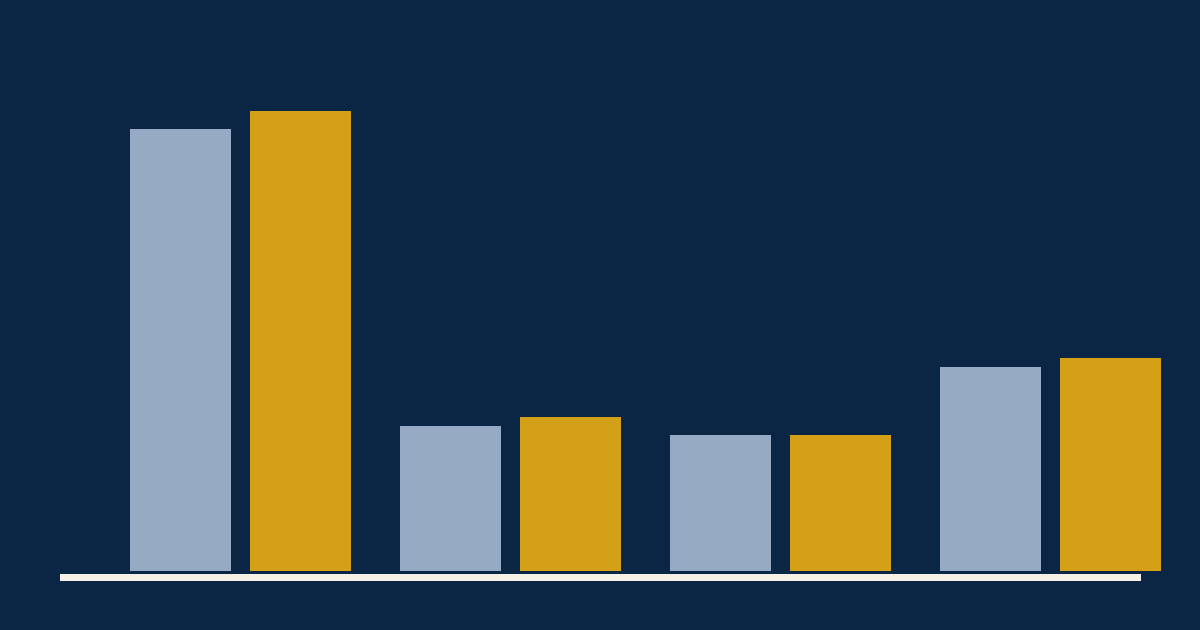
The $1,000 increase in the 401(k) limit is about 4.1% over 2026. The age 50 catch-up rises about 6.3%. The IRA limit stays flat, so the gap between what a workplace plan and an IRA can hold keeps widening.
How the $25,500 limit works
The $25,500 figure is a limit on your own elective deferrals, meaning the money you choose to send from your paycheck to a 401(k), 403(b), governmental 457(b) or the federal Thrift Savings Plan. A few rules shape how it works in practice:
- Traditional and Roth deferrals share one limit. If your plan offers both, what you put in each type adds up to the same $25,500.
- The limit follows you, not the plan. If you change jobs during 2027, deferrals at both employers count toward your personal limit. Add up the year-to-date totals from each pay stub before you raise an election at a new job.
- Employer money is separate. A match or profit-sharing contribution does not use up your $25,500. It counts toward the $75,000 overall limit instead. Adding the catch-up amounts the same way the IRS presents the 2026 figures gives $83,500 for age 50 and older and $86,750 for ages 60 to 63 in 2027.
- Your plan may be stricter than the law. The IRS limit is a ceiling. Some plans cap deferrals at a lower percentage of pay, and some do not allow catch-ups at all.
Most people will never reach $25,500, and that is fine. The limit tells you the ceiling, not a target. A better starting point is your employer match: if your plan matches part of what you contribute, contributing enough to collect all of it is usually the first step. Your plan documents or HR team can tell you the exact match formula and whether it is calculated per paycheck or at year-end.
Catch-up contributions in 2027: ages 50 and older, and ages 60 to 63
According to the IRS catch-up contributions page (last updated May 7, 2026), you qualify for the standard catch-up if you are age 50 or older by the end of the calendar year. In 2027 that amount is $8,500, on top of the $25,500 base limit, for a total of $34,000.
Workers who turn 60, 61, 62 or 63 during the year can make a larger catch-up in most 401(k), 403(b), governmental 457 and Thrift Savings Plan arrangements. For 2027 that higher catch-up is $11,750 instead of $8,500, which brings the maximum to $37,250. Turning 64 ends eligibility for the higher amount, and you go back to the standard catch-up.
| Your age in 2027 | Base limit | Catch-up | Maximum employee deferral |
|---|---|---|---|
| Under 50 at year-end | $25,500 | None | $25,500 |
| 50 to 59, or 64 and older | $25,500 | $8,500 | $34,000 |
| Turning 60, 61, 62 or 63 | $25,500 | $11,750 | $37,250 |
Two details are easy to miss. First, the IRS says catch-up contributions only start counting once your regular deferrals exceed the base limit, the plan’s own limit or a testing limit, and they are capped at the lesser of the catch-up amount or your compensation minus your other deferrals. Second, catch-ups must be made as elective deferrals before the end of the plan year. They are not something you can add in April.
The Roth catch-up rule for higher earners
Since 2026, a higher earner’s catch-up contributions are treated differently. The IRS catch-up page says that if your plan has Roth features and offers catch-ups, participants whose prior-year wages with the plan sponsor were above the threshold must make their catch-up contributions on a Roth basis. For 2026 that threshold was $150,000. Notice 2026-66 lists the threshold as $155,000 for 2027.
In plain terms: if your 2026 wages from your employer were above $155,000, your 2027 catch-up must go into the Roth side of the plan. Your first $25,500 of deferrals can still be traditional (pre-tax). The IRS page does not explain how the wage figure is measured beyond calling it prior-year wages with the plan sponsor, so ask your plan administrator which pay counts in your case.
Worked example (hypothetical). Carlos, age 52, earned $160,000 from one employer in 2026. His plan offers catch-ups and a Roth option. Because $160,000 is above $155,000, his $8,500 catch-up for 2027 must be Roth. He can still put the full $25,500 in pre-tax. The difference is the tax bill: pre-tax dollars lower this year’s taxable income, while Roth dollars do not. At an assumed 24% federal bracket, the $8,500 would have saved about $2,040 in federal income tax if it were pre-tax ($8,500 × 0.24), so that is the upfront deduction he gives up in exchange for tax-free qualified withdrawals later. If his 2026 wages had been $150,000, the Roth requirement would not apply to him.
To see where your next dollar of income falls on the federal brackets, which helps decide how much a deduction is worth to you, read our guide to the 2027 tax brackets and standard deduction.
What maxing out costs per paycheck
Dividing the limit by your number of pay periods shows what it takes to reach it. The table assumes you contribute evenly all year, starting with the first paycheck of 2027.
| Pay schedule | Under 50 ($25,500) | Age 50 to 59 ($34,000) | Ages 60 to 63 ($37,250) |
|---|---|---|---|
| Weekly (52) | $490.38 | $653.85 | $716.35 |
| Biweekly (26) | $980.77 | $1,307.69 | $1,432.69 |
| Semi-monthly (24) | $1,062.50 | $1,416.67 | $1,552.08 |
| Monthly (12) | $2,125.00 | $2,833.33 | $3,104.17 |
Someone who maxed out in 2026 at 26 biweekly paychecks contributed $942.31 each time. Reaching the 2027 limit means $980.77 per paycheck, an increase of $38.46.
Worked example (hypothetical). Maya, age 34, earns $80,000 and is paid biweekly. Maxing out at $25,500 would take 31.9% of her pay, which is unrealistic for most budgets. Here is how some more typical choices compare:
| Contribution rate | Per year | Per biweekly paycheck |
|---|---|---|
| 6% of pay | $4,800 | $184.62 |
| 10% of pay | $8,000 | $307.69 |
| 15% of pay | $12,000 | $461.54 |
| Maximum ($25,500) | $25,500 | $980.77 |
If Maya’s employer matches 50% of the first 6% she contributes, then contributing 6% ($4,800) earns a $2,400 match, which is an immediate 50% return before any investment growth. That is a made-up formula, so check your own plan. Going from 6% to 10% adds $3,200 a year of her own money and, in this example, no extra match. A budgeting framework like the 50/30/20 rule can help you see where the extra savings could come from, and our free financial calculators let you test different amounts.
2027 IRA contribution limits
The IRA limit stays at $7,500 for 2027, and the catch-up for age 50 and older stays at $1,100, so the maximum for a saver 50 or older is $8,600. The limit applies to all your traditional and Roth IRAs combined, not to each account. You also generally cannot contribute more than your taxable compensation for the year, according to the IRS IRA contribution limits page. Unlike 401(k) deferrals, IRA contributions for a tax year can generally be made until the tax return due date, not counting extensions, so 2027 contributions can wait until spring 2028. (We cited that page in our 2026 guide and did not re-open it for this article, so confirm the details on IRS.gov before acting.)
You can fund an IRA and a 401(k) in the same year. The limits are separate. What changes is whether your IRA contribution is deductible (traditional) or allowed at all (Roth), which depends on income, filing status and workplace plan coverage.
2027 Roth and traditional IRA income ranges
Every IRS income range rose in 2027 except the married-filing-separately ranges. Higher ranges mean more savers can deduct traditional IRA contributions or contribute directly to a Roth IRA. The ranges use modified adjusted gross income (MAGI).
| Rule and filing status | 2026 range | 2027 range |
|---|---|---|
| Roth IRA eligibility: single or head of household | $153,000 to $168,000 | $158,000 to $173,000 |
| Roth IRA eligibility: married filing jointly | $242,000 to $252,000 | $250,000 to $260,000 |
| Traditional IRA deduction: single, covered by a workplace plan | $81,000 to $91,000 | $83,000 to $93,000 |
| Traditional IRA deduction: married filing jointly, contributor covered by a workplace plan | $129,000 to $149,000 | $133,000 to $153,000 |
| Traditional IRA deduction: not covered, but spouse is | $242,000 to $252,000 | $250,000 to $260,000 |
| Married filing separately (Roth, or traditional if covered) | $0 to $10,000 | $0 to $10,000 |
Inside a range, the allowed (or deductible) amount shrinks gradually. As a rough illustration, a single filer with a workplace plan and a MAGI of $88,000 is halfway through the $83,000 to $93,000 range, so about half of the $7,500 might be deductible, around $3,750. A single filer with a MAGI of $165,500 is halfway through the Roth range of $158,000 to $173,000, so the Roth limit might be reduced by about half. Those are simplified estimates. The IRS uses a worksheet with rounding rules, so use it or a tax professional for the exact figure.
Savers above the Roth limit sometimes convert existing pre-tax money instead. Conversions have their own tax rules and timing, covered in our Roth conversion guide.
Other 2027 limits that changed
Notice 2026-66 lists many more dollar limits. These matter most to small business owners, plan sponsors and higher earners:
| Limit | 2026 | 2027 |
|---|---|---|
| SIMPLE plan employee deferral | $17,000 | $17,500 |
| SIMPLE deferral for certain applicable plans | $18,100 | $19,100 |
| SIMPLE catch-up, age 50 and older | $4,000 | $4,000 |
| SIMPLE catch-up, ages 60 to 63 | $5,250 | $5,250 |
| Plan compensation limit (Section 401(a)(17)) | $360,000 | $375,000 |
| Highly compensated employee threshold | $160,000 | $170,000 |
| Key employee threshold | $235,000 | $245,000 |
| Defined benefit annual benefit limit (Section 415(b)) | $290,000 | $300,000 |
| Qualified charitable distribution limit | $111,000 | $114,000 |
| Roth catch-up prior-year wage threshold | $150,000 | $155,000 |
If you are approaching or past age 73 and weighing charitable gifts from an IRA, the qualified charitable distribution figure interacts with required minimum distributions. See our RMD deadline guide for how those distributions work.
Saver’s Credit becomes Saver’s Match in 2027
One footnote in Notice 2026-66 affects lower- and middle-income savers. It says that for tax years beginning after December 31, 2026, the Saver’s Match under Section 6433 replaces the Saver’s Credit for elective contributions to qualifying retirement plans and IRAs, while the credit remains for ABLE account contributions. The notice still lists income limits for the credit, including $41,500 for single filers, $62,250 for heads of household and $83,000 for married couples filing jointly in 2027, and the IRS release ties those limits to ABLE contributions after December 31, 2026. The match works differently from the credit, so read our guide to the Saver’s Match for 2027 before assuming your old credit calculation still applies.
Which limit applies to you?
| Your situation | The 2027 number to check | What to confirm |
|---|---|---|
| Under 50, one employer plan | $25,500 deferral | Plan’s own cap and match formula |
| Age 50 to 59, or 64 and older | $34,000 total with catch-up | Plan allows catch-ups; Roth rule if 2026 wages were above $155,000 |
| Turning 60 to 63 in 2027 | $37,250 total with higher catch-up | Plan supports the higher amount |
| Changed jobs in 2027 | $25,500 across all employers | Year-to-date total from each pay stub |
| Self-employed or small business | $75,000 overall limit; SIMPLE $17,500 | Plan type and a tax professional’s advice |
| Saving in an IRA too | $7,500 ($8,600 at 50 and older) | Whether your MAGI falls in a phase-out range |
| Lower income | Saver’s Match instead of the credit | Match eligibility rules |
What to do now: a 2026 to 2027 checklist
The new limits do not take effect until January 1, 2027. Until then, 2026’s $24,500 limit still governs, and our 2026 guide covers the year-end steps. Once that is handled, here is a sensible order for 2027:
- Finish 2026 first. Check your year-to-date 2026 deferrals and decide whether to adjust your last paychecks of the year.
- Check your plan’s rules. Ask whether it allows catch-up contributions, the ages 60 to 63 amount and a Roth option. Plans do not always add features right away.
- Look up your 2026 wages. If you are 50 or older and may be above $155,000 with one employer, ask how the Roth catch-up rule applies to you.
- Set your January election. Decide on a percentage or dollar amount using the per-paycheck table above. Start with enough to capture the full match.
- Plan for the increase. If you already max out, your contribution has to rise by about $38 per biweekly paycheck. Payroll systems rarely do that automatically.
- Check IRA eligibility. Compare your expected 2027 MAGI with the ranges above before opening or funding an IRA.
- Review the tax effect. Pre-tax contributions lower taxable income now, and Roth contributions do not. A $1,000 pre-tax contribution would reduce federal income tax by roughly $220 at an assumed 22% bracket, but your own bracket may differ.
For broader context on how retirement saving fits with debt, cash reserves and other goals, see our personal finance guide for 2026.
Frequently asked questions
What is the 401(k) contribution limit for 2027?
$25,500 for employee deferrals, up from $24,500 in 2026, plus a $8,500 catch-up for workers 50 and older ($11,750 for ages 60 to 63 in plans that allow it).
Does my employer match count toward the $25,500?
No. Employer contributions count toward the separate $75,000 overall annual additions limit, not your personal deferral limit.
Can I contribute to a 401(k) and an IRA in 2027?
Yes, the limits are separate. Your income and workplace coverage determine whether the IRA contribution is deductible or, for a Roth IRA, allowed.
Is the IRA limit going up in 2027?
No. It stays at $7,500, with the $1,100 catch-up unchanged, though the income ranges for the Roth IRA and traditional IRA deduction rise.
When do the 2027 limits start?
They apply to contributions for 2027. Payroll deferrals for 2027 begin with your first paycheck of the new year, so 2026 deferrals still use the $24,500 limit.
Sources reviewed
- IRS: 401(k) limit increases to $25,500 for 2027, IRA limit remains $7,500 (IR-2026-136, November 12, 2026), read November 15, 2026
- IRS Notice 2026-66: 2027 amounts relating to retirement plans and IRAs, read November 15, 2026
- IRS: Retirement topics, catch-up contributions (page updated May 7, 2026), read November 15, 2026
- IRS: Retirement topics, IRA contribution limits, cited from our 2026 guide, not re-opened November 15, 2026
Disclaimer: This article is for general education and is not tax, legal or investment advice. Rules and limits change, and your situation may differ. Consider speaking with a qualified tax professional or your plan administrator. Last checked: November 15, 2026.
Related: Saver’s Match 2027: who qualifies and how to prepare.

FinovativeHub Editorial Team publishes personal finance guides for American readers, covering budgeting, credit cards, loans, and retirement accounts. We aim to explain how things work in plain English and to cite official sources, such as the IRS, where they apply. Rates, fees, and limits change, so confirm current terms with the provider or agency before you act.